Warn Central Texas

This is a Test

The Texas Division of Emergency Management asked all local jurisdictions with emergency warning or alerts systems to test their systems from 10 a.m. to 12:30 p.m., Thursday, April 2, 2026. In the CAPCOG region, local governments coordinated these messages and worked to notify the public before their launch.

This test should lead to residents in the 10-county region receiving multiple emergency messages, with the first being a message from the Capital Area Council of Governments (CAPCOG). County and municipal governments message should follow. Colleges, universities, and school districts also are participating. Messages will be sent directly to cellphones through the IPAWS or WEA systems. Messages also will be sent to landline phones, cellphones, and emails via the Warn Central Texas regional notification system and other systems. Warn Central Texas notifications are sent via call, text and email depending on a subscriber’s settings.

Do Not Call 9-1-1 if you receive this test message.

Tests such as this are important to evaluating the effectiveness and functionality of public warning tools during emergencies and disasters.

It is a regional priority for all local jurisdictions to be able to contact as many residents as quickly possible during an emergency. CAPCOG and its stakeholders continually train on how to best send and draft critical messages that are pertinent and actionable to residents when emergencies occur.

Governments in the region have multiple ways of sending messages. However, Texas has the largest opt-out rates for cellphone emergency messages in the United States. The best way to ensure Warn Central Texas has your correct information is to self-register at WarnCentralTexas.org.

If you believe you received a Warn Central Texas Message by mistake, email warncentraltexas@capcog.org. Correcting information is a manual process responding may take time.

Helpful Information

CAPCOG and its member governments compiled a list of helpful information about this test and links to ensure residents know how to turn on their cellphone’s emergency notifications or signup for local emergency alerts. 

What will the messages say?

Exact messaging will be determined by each jurisdiction, so some messaging may be different. However, sample messages were distributed around the region. They read as follows:

Sample short message for Wireless Emergency Alerts (WEA)

(Jurisdiction or agency)-This is a TEST. No action required. (Website address)

WEA messages are generally shorter in message length.

Sample Warn Central Texas & Integrated Public Alert & Warning System Messages

(Name of Jurisdiction), This is a TEST of the (Jurisdiction again) Wireless Emergency Alert system. This scheduled test checks our ability to send emergency messages directly to mobile devices in a targeted area. No action is required. THIS IS ONLY TEST. Go to (Website address) for more information.

Sample From ISDs

(Name of District), This is a TEST of the (DISTRICT) Emergency Communication system. This scheduled test checks our ability to send emergency messages directly to our stakeholders. No action is required. THIS IS ONLY TEST. Go to (Website address) for more information.

CAPCOG uses a Regional Notification System (RNS), WarnCentralTexas.org, as a crucial public safety tool for local governments to warn and inform residents about natural and man-made disasters happening in their neighborhoods. The tool allows governments to send text messages, phone calls, or emails to those in the system. It is effective for notifying a large number of people in a particular location in a short period.

CAPCOG uses the region’s 9-1-1 phone database so all local governments can contact landline and Voice Over Internet Protocol (VoIP) phone numbers during an emergency; however, residents have to voluntarily subscribe to the service to receive text, cellphone calls, or email messages.

Messages may include content such as incident-specific information, recommended protective actions, or response directives. They can be delivered to a variety of devices that accept voice, email, or SMS text content and to alpha or numeric pagers. The message sender identifies recipients, which could be a single street, a neighborhood, or an entire county; develops the message and determines which types of devices receive the message.

WarnCentralTexas.org Awareness

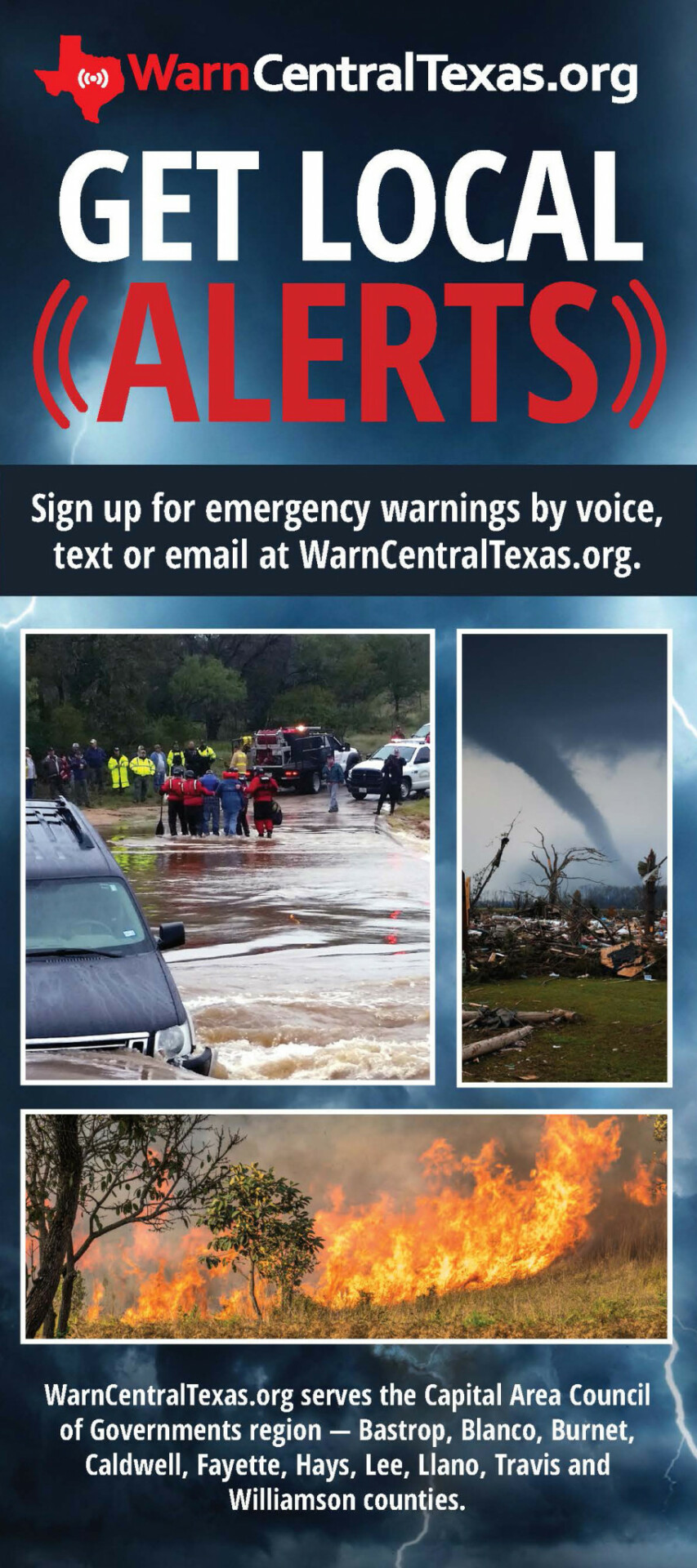
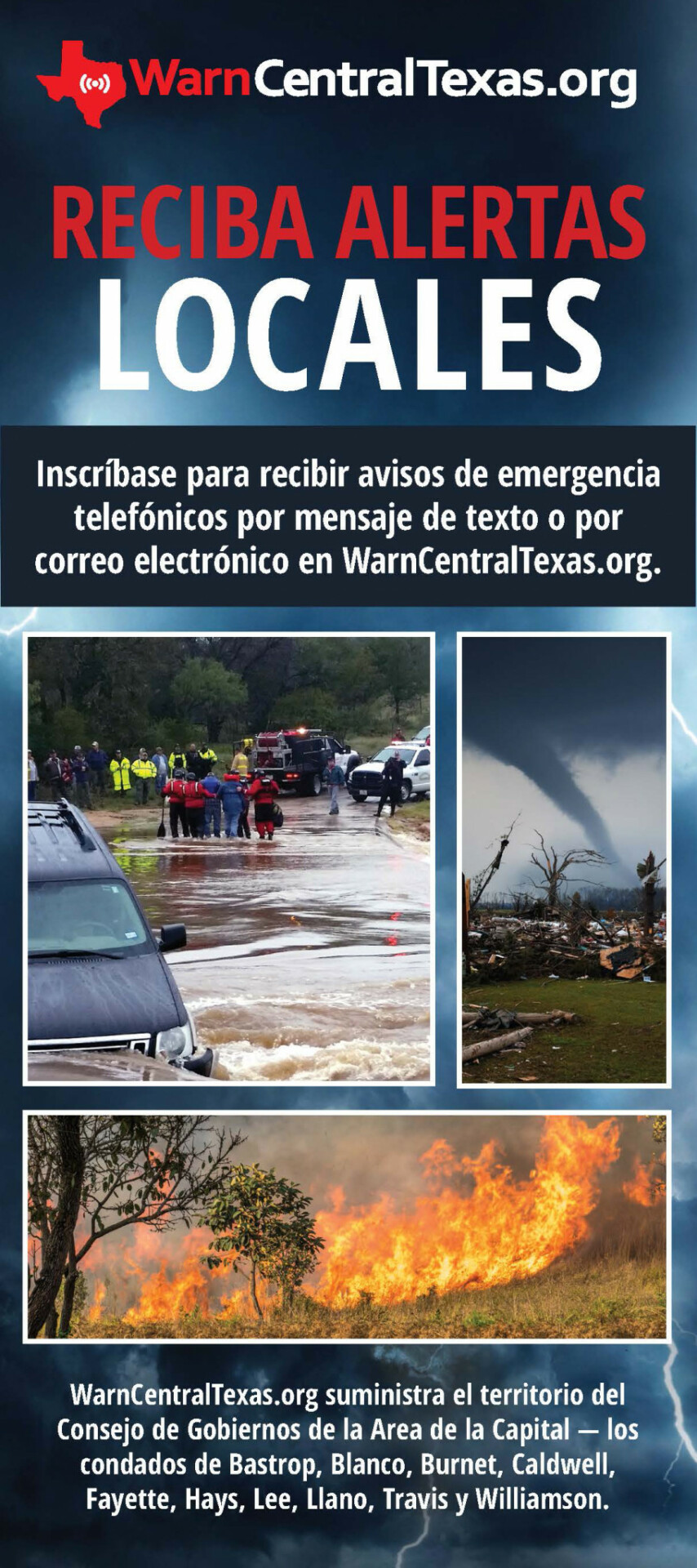
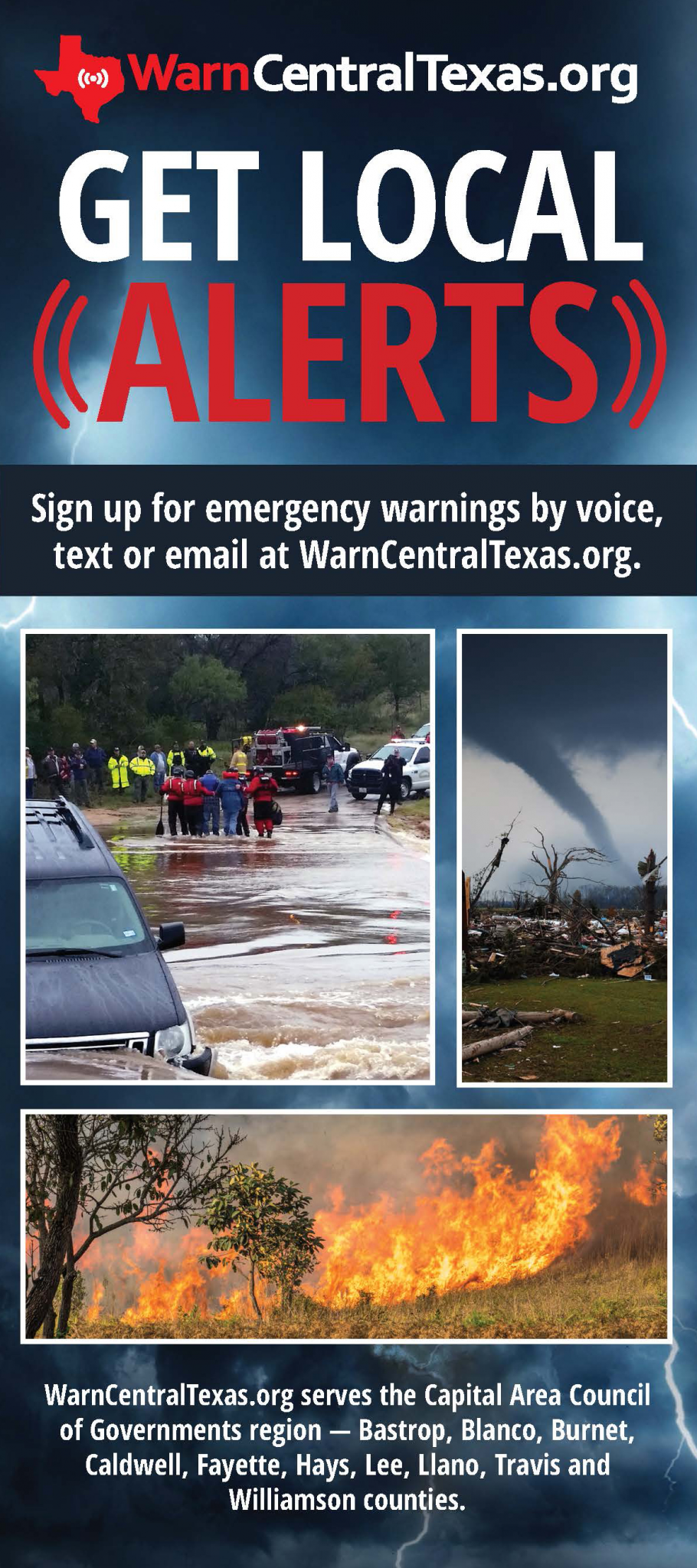
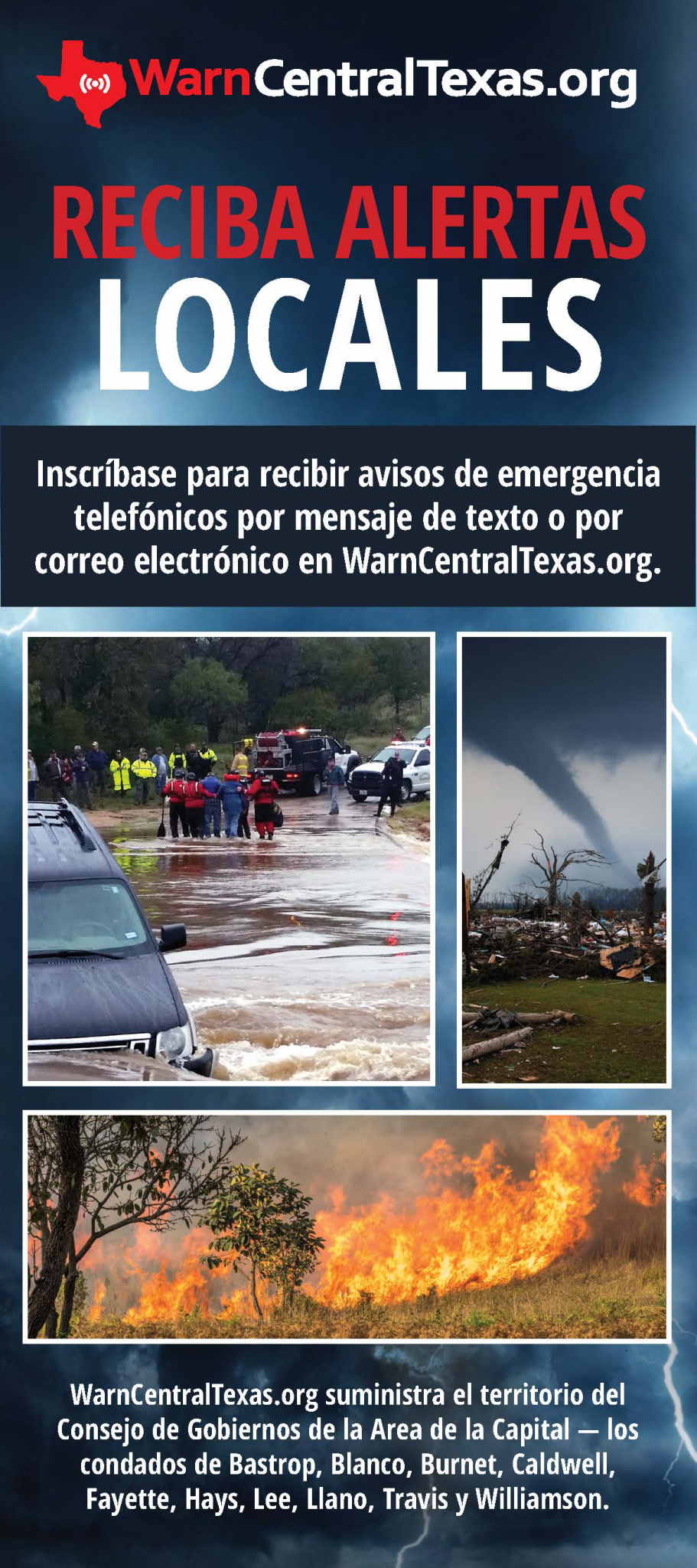
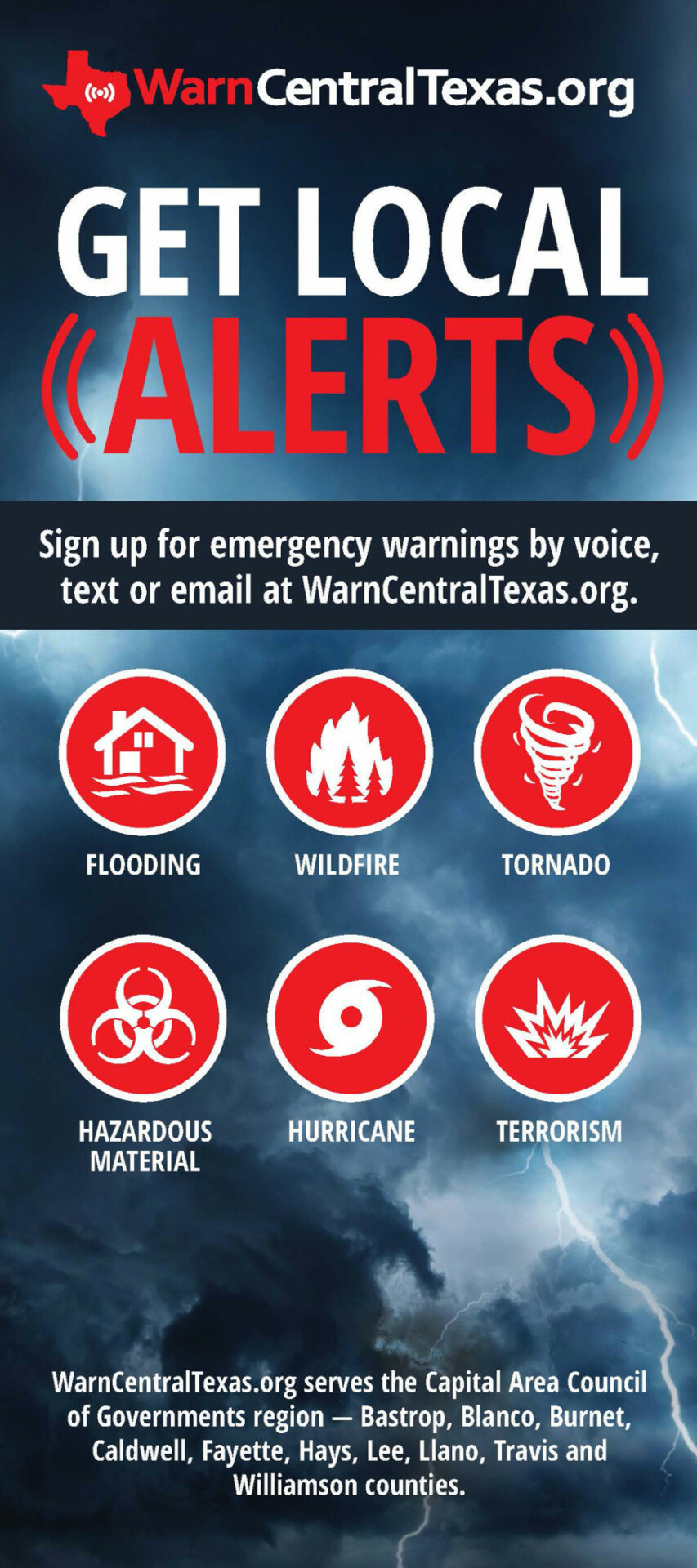
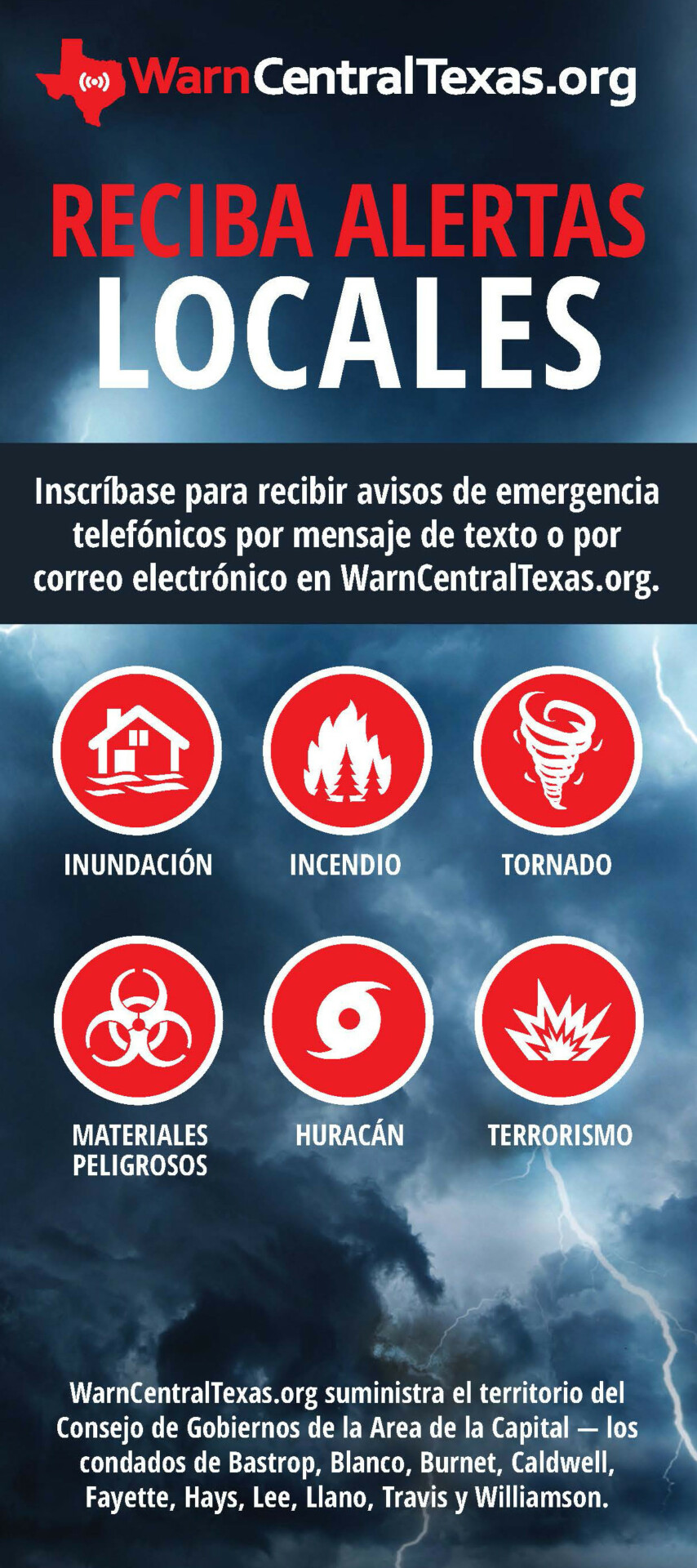
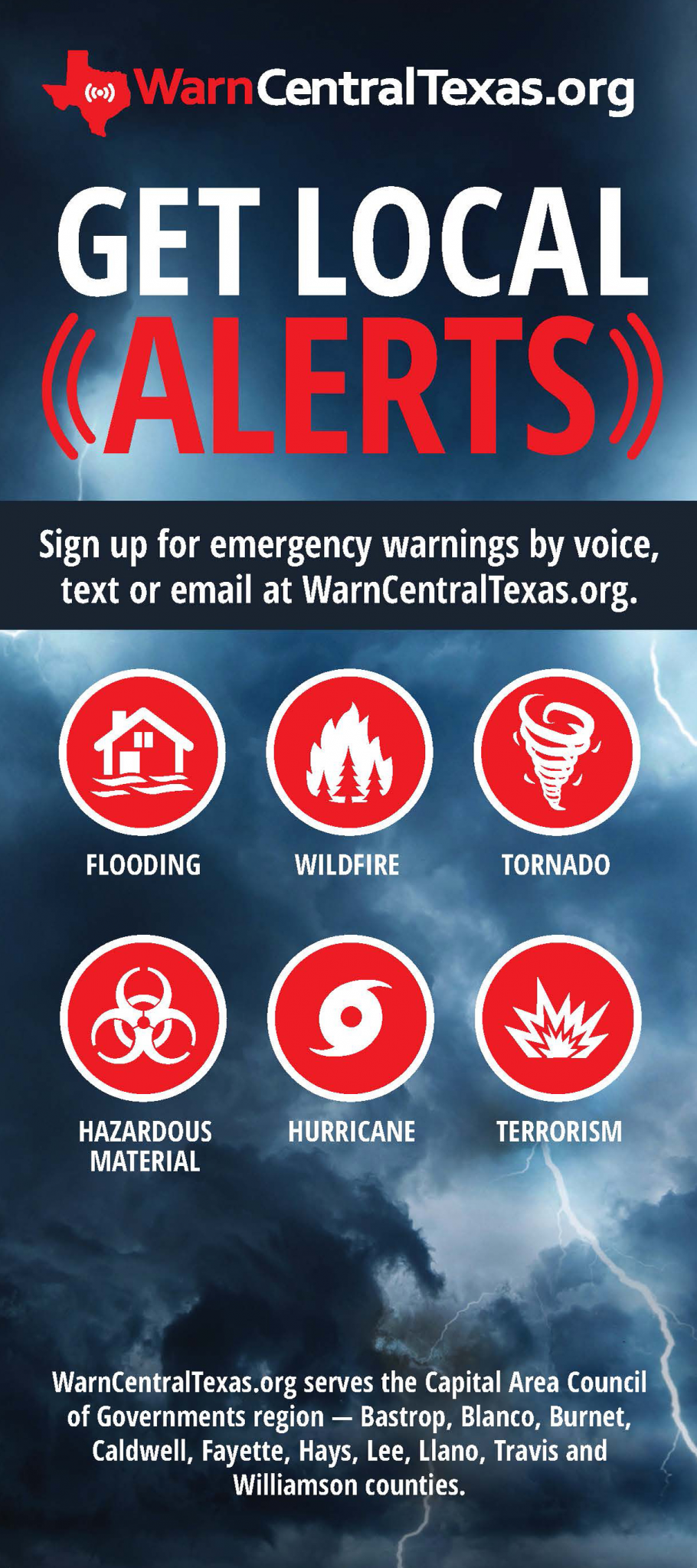
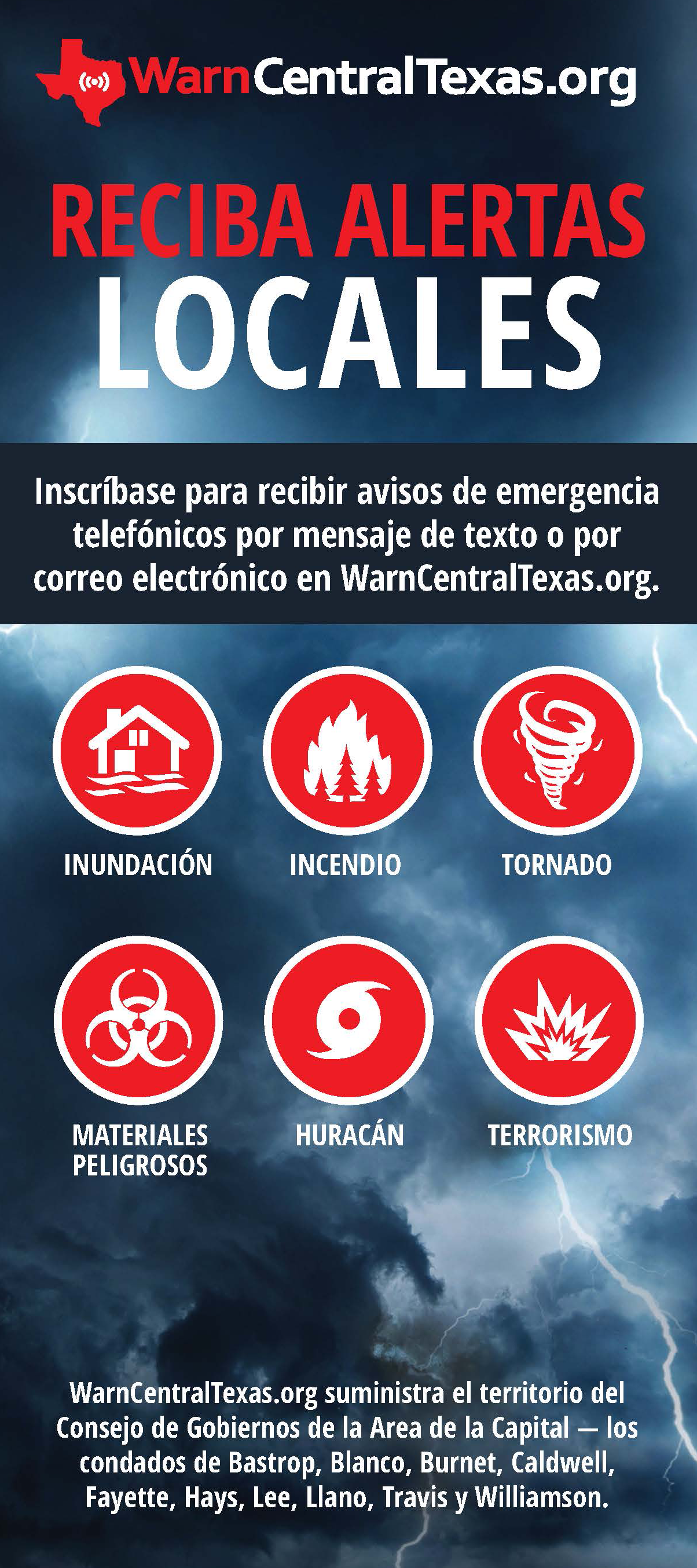
Emergency Management Coordinators and local government officials throughout the 10-county region want every resident to register their mobile devices at WarnCentralTexas.org, so they can stay informed during disasters and other emergency situations. Below are some tools communities can use to easily help residents learn about WarnCentralTexas.org and encourage registration.

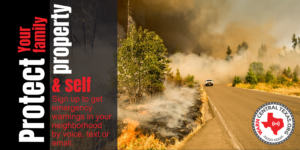
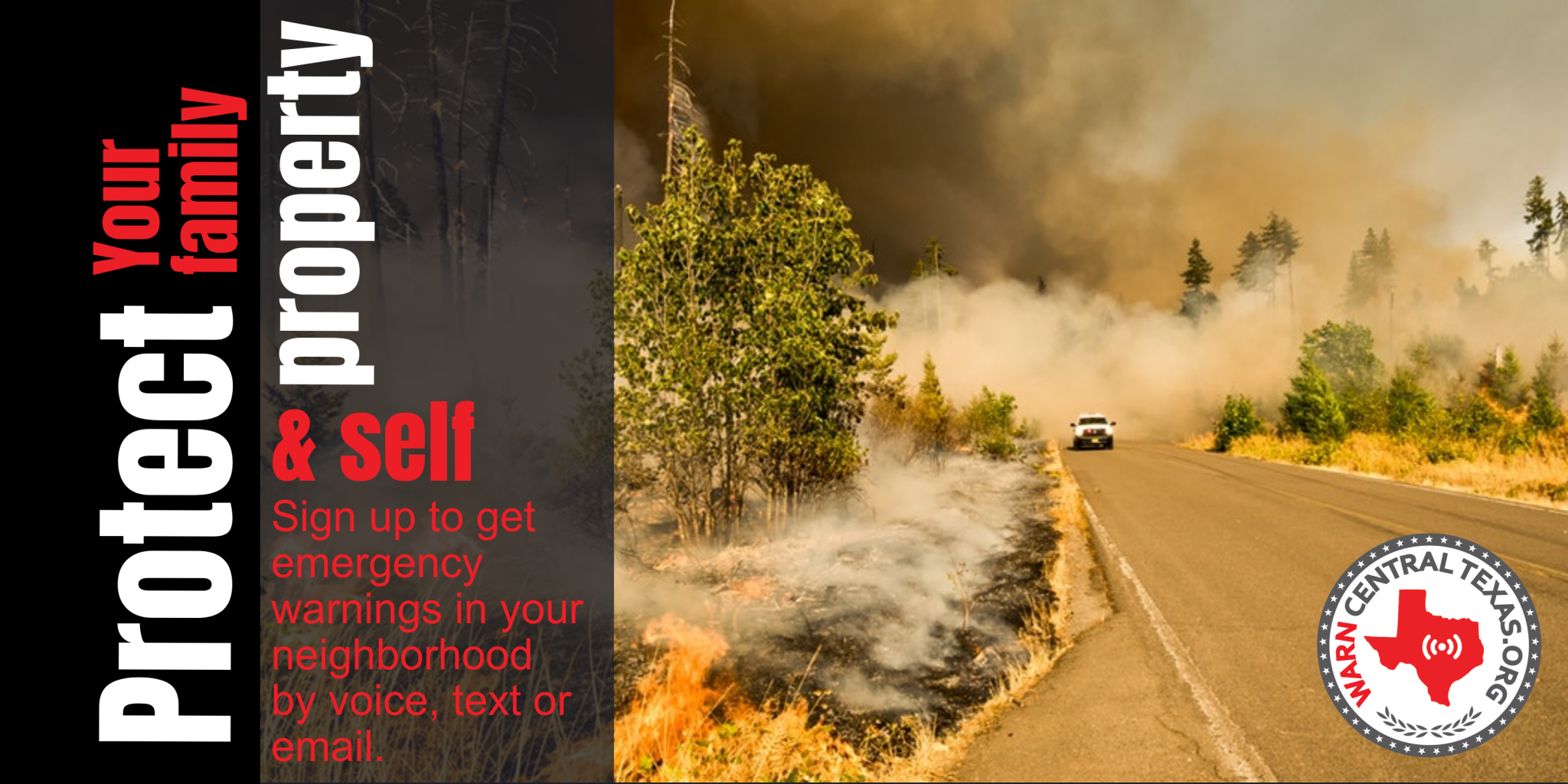
protect your family, property, and self

WarnCentralTexas.org wildfire image in English.

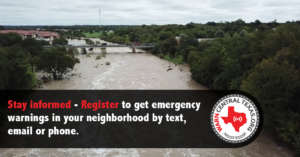
stay informed

WarnCentralTexas.org San Gabriel River flooding images in English and Spanish.

stay informed

WarnCentralTexas.org Austin flooding images in English and Spanish.